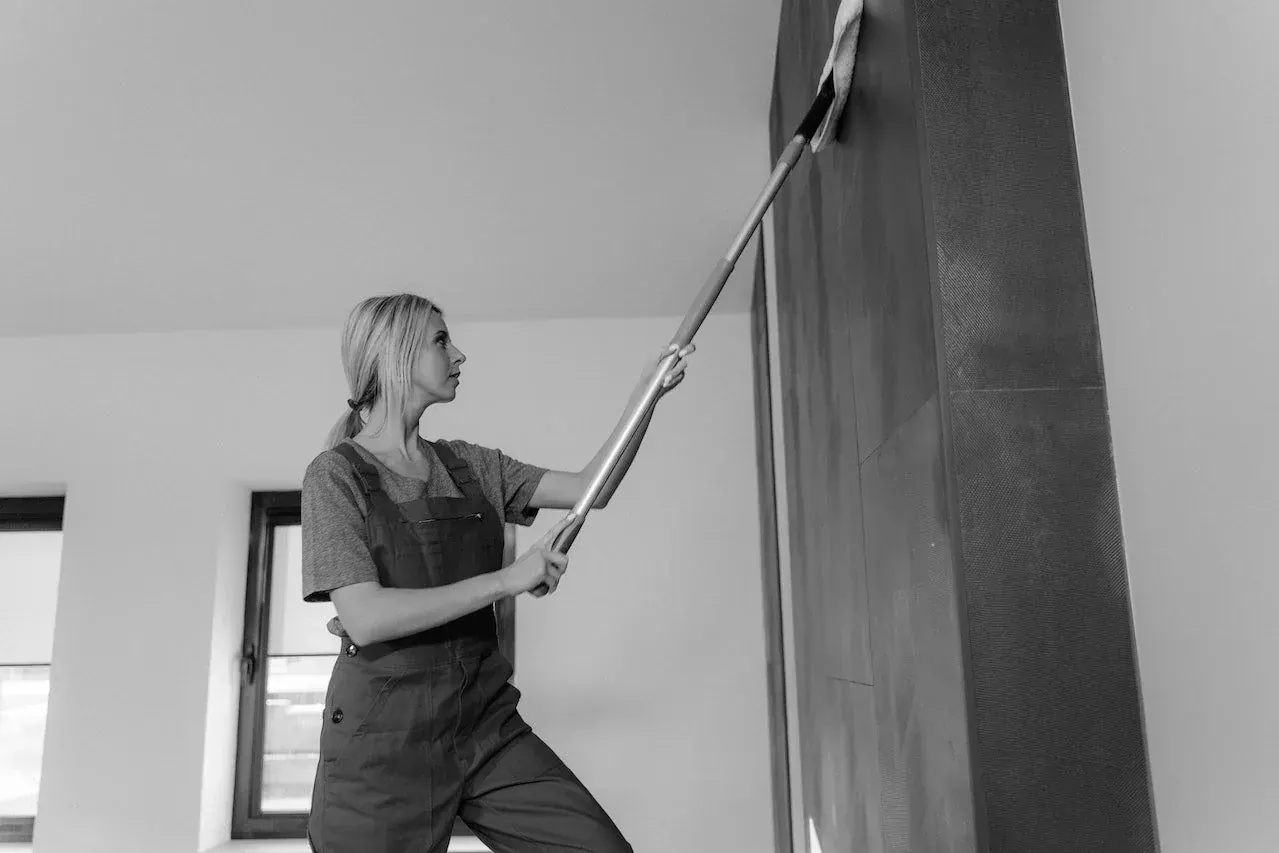
1. Prepare Walls for Cleaning
Before cleaning walls, it's important to prep them by getting rid of any loose dust, dirt or debris. Otherwise you'll just smear that stuff around once the actual cleaning starts.
Start with a dry microfiber duster and lightly dust the wall surfaces. A Swiffer-style duster on an extendable pole works great for hard-to-reach areas and ceilings. Be sure to get into corners, along trim and the top edges where dust loves to collect.
For more stubborn dust or cobwebs, wipe the area first with a slightly damp microfiber cloth. It picks up particles better than a dry cloth. Don't use too much water. You just want the cloth lightly damp.
Pay special attention around vents, fans, light fixtures, wall hangings and other spots that tend to collect more dust. Use a small vacuum crevice tool to clean any cracks or crevices.
Finally, go over everything with the duster one more time. That picks up any fine particles that are left, so the walls are ready for the real cleaning. With the pre-cleaning done, dirt won't smear into the wall paint later.
2. Prepare Cleaning Solution
For the cleaning solution itself, you'll want a gentle cleaner that cuts through typical dirt and grease buildup. Skip harsh chemicals that could damage or discolor delicate wall paints.
A spray bottle of warm water with just a couple drops of mild dish soap like Dawn or Joy works great in most situations. The small amount of degreaser in the soap helps cut through oils, finger marks and residue without being too abrasive.
For grimy or greasy kitchen walls, up the cleaning power by swapping half the water for white vinegar. The acetic acid in vinegar dissolves sticky grease and residue nicely.
For large walls, you can use a bucket of cleaning solution and a large sponge. A spray bottle gives you more control when you're spot cleaning smaller areas. Spray a light mist right onto the wall or dampen your cleaning cloth.
Never saturate or soak walls with water. Be careful around wallpaper, delicate surfaces and cracks. Keep cleaner away from electrical outlets, switches and fixtures.
3. Spot Clean Noticeable Stains
Before you clean the whole wall, look for obvious stains or marks that need special attention. Treat those spots first.
For crayon, marker or tougher grease stains, gently rub the spot with a damp baking soda paste using your fingers or a soft cloth. Let it sit briefly, then wipe it clean. Baking soda is a mild abrasive, so it lifts stubborn marks without harsh scrubbing.
If any spots are left, try dabbing a bit of undiluted dish soap right on them with an old toothbrush or your fingertip. Let it soak in for a moment, then scrub lightly and rinse with water. This helps lift set-in stains.
Magic eraser sponges work well for quickly cleaning marks and scuffs, but go easy. Their melamine foam can damage delicate wall paints if you rub too hard.
Finish spot cleaning by wiping the treated areas with your cleaning solution to rinse away any product residue. Now the walls are ready for an overall cleaning.
4. Gently Wipe Walls with Cleaning Solution
With the prep work and spot cleaning finished, it's time for the satisfying part: wiping down the walls from top to bottom. Work in sections so you get the most thorough clean.
Use a large microfiber sponge or a soft, lint-free rag to apply your cleaning solution. Wipe gently in overlapping strokes from top to bottom, and rinse the sponge or cloth often.
On flat walls, work evenly. For inside corners or around obstructions, wrap your cloth around your fingers to reach. Switch to a small detail brush to clean along trim or edges.
Take extra care on semi-gloss and flat paints, which can show wipe marks. Rinse your cleaning cloth often and wipe gently so you aren't just pushing dirt around. Wipe slowly and let the solution sit briefly on any tough spots that are left.
Keep wiping and rinsing until the whole wall looks clean. For the final touch, use a fresh microfiber cloth dampened with clean water only. That takes off any film the cleaning products left behind.
In high-traffic areas, a thorough wipe-down about once or twice a year keeps walls looking fresh. For quick touch-ups, spot clean smudges as needed. Careful prep and a gentle touch keep you from damaging delicate wall surfaces.
The Short Version
Good wall cleaning starts with prep. Use a duster to get the loose debris off first. Then make a mild cleaning solution, like diluted dish soap and water. Spot clean stubborn stains with baking soda or undiluted soap if you need to. After that, gently wipe the whole wall in sections using overlapping strokes. Take extra care on flat or semi-gloss paints, since they're prone to showing marks. Regular thorough cleanings and quick spot treatments keep walls looking their best.